


 English
  日本語
日本語  Deutsch



Industry News
Are Vacuum Stainless Steel Flasks Better for Hot or Cold?
2026-05-15
You pour your morning coffee, close the lid tightly, and expect it to remain pleasantly warm even two hours later. Alternatively, you might load ice water before a long commute, hoping it stays refreshingly cold well into the afternoon. In both situations, the flask either performs as promised or it fails, and when it fails the letdown is instant. Among all performance factors, temperature retention is critical when selecting Vacuum Stainless Steel Flasks , yet many buyers do not clearly distinguish how heat retention and cold retention behave differently, or why maintaining one condition can be more challenging than the other. Understanding these differences brings much-needed clarity and makes choosing the right option far simpler.
How Heat Transfer Works Inside a Flask
Before comparing hot and cold performance, it helps to understand what is actually happening inside the flask wall.
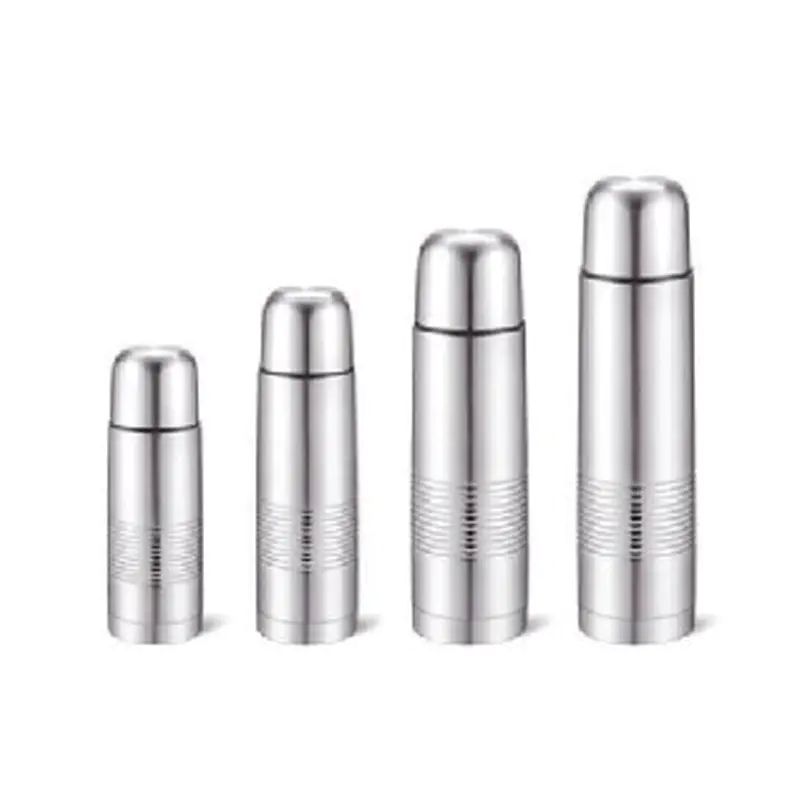
Temperature loss — whether the drink is hot or cold — comes down to heat transfer. Heat always moves from a warmer area to a cooler one. In a hot drink scenario, heat moves outward from the drink to the surrounding air. In a cold drink scenario, heat moves inward from the surrounding air into the drink. The mechanism is the same; only the direction changes.
Three physical processes drive that transfer:
- Conduction: Heat moving through solid material, such as the flask wall itself
- Convection: Heat carried by moving air or fluid around the container
- Radiation: Heat transmitted through electromagnetic waves, even across a vacuum
A well-designed vacuum flask addresses all three. The double-wall construction keeps the two layers of stainless steel separated. The vacuum between them removes the medium through which conduction and convection operate. A reflective inner surface on the vacuum layer reduces radiative heat transfer. Together, these three mechanisms account for why a quality flask holds temperature so well in either direction.
Why Hot Retention Is Harder to Maintain
Hot drinks face a steeper challenge than cold ones — and understanding why is useful.
The core issue is temperature differential. A hot drink sitting inside a flask at a high temperature has a larger gap between its temperature and the surrounding environment than a cold drink does. Heat transfer rate increases with that gap. The wider the difference between the drink and the ambient air, the faster energy moves across the barrier.
Practical implications:
- A very hot drink loses heat more aggressively in the early period than a cold drink gains heat
- Opening the lid on a hot drink releases a significant amount of energy as steam, which accelerates cooling noticeably
- The lid seal quality matters more for hot drinks, since heat escapes readily through any gap
- Even minor imperfections in the vacuum layer have a more pronounced effect on hot retention than cold
This does not mean hot retention is poor in a quality flask. It means the physics work slightly against it, and the flask design needs to compensate.
Why Cold Retention Often Feels More Consistent
Cold beverages benefit from a physical characteristic that hot drinks do not have: the plateau effect of melting ice.
When ice is present in a drink, the temperature holds at a stable point while the ice is absorbing energy to melt. The drink does not warm noticeably until that process is complete. This gives cold retention a perceived stability that hot retention cannot replicate — a hot drink cools gradually and continuously from the moment it is sealed.
Other factors that support cold retention:
- Lower temperature differential between a cold drink and ambient air means slower heat gain overall
- Ice acts as a thermal reservoir, absorbing incoming heat before it raises the drink temperature
- Cold drinks are less affected by brief lid openings than hot drinks are by the same action
Carbonation in cold drinks can add a perception of freshness that masks minor temperature increases
The result is that many users find their cold drinks seem to hold temperature longer in real-world conditions, even when the flask's insulation is identical in both directions.
The Vacuum Stainless Steel Flask: How It Handles Both
A quality vacuum stainless steel flask does not use different insulation mechanisms for hot and cold. The same structure — double wall, vacuum layer, reflective interior — handles both. What differs is how the physics of each scenario interact with that structure.
Key structural elements and what they contribute:
| Structural Feature | Effect on Hot Retention | Effect on Cold Retention |
|---|---|---|
| Double-wall stainless steel | Reduces conductive heat loss outward | Reduces conductive heat gain inward |
| Vacuum layer | Eliminates convection and conduction through the wall | Same — no medium for heat to travel through |
| Reflective inner coating | Reduces radiated heat loss from hot liquid | Reduces radiated heat gain from environment |
| Quality lid seal | Prevents heat escape through the opening | Prevents warm air entry and cold loss |
| Wide-mouth vs narrow opening | Wider opening increases exposure on use | Narrower openings reduce temperature exchange |
The flask itself is neutral. Its job is to slow heat transfer in whichever direction the temperature gradient runs. How long it succeeds depends on the quality of each structural element and how the flask is used.
Does Drink Type Affect Which Retention Matters More?
Drink choice is a practical variable when deciding which retention performance should carry more weight in a purchasing decision.
Hot Drink Users
For coffee, tea, or other hot beverages consumed over a morning commute or work session, hot retention is the priority. The drink starts hot and the goal is to keep it at a drinkable temperature for as long as possible.
What matters for this use case:
- A tight lid that seals reliably and does not release steam
- High-quality vacuum layer with no degradation
- Minimal surface area at the opening to reduce heat escape when drinking
- Flask capacity matched to a realistic consumption window — a larger flask is not always better if the drink cools before it is finished
Cold Drink Users
For iced water, cold brew, juice, or chilled beverages carried through a warm day or outdoor activity, cold retention takes priority.
What matters for this use case:
- Sufficient capacity to include ice, which extends the cold plateau
- A seal that does not allow condensation to form on the exterior, which indicates heat is transferring through the wall
- Wall thickness and vacuum integrity suited to sustained exposure in warm environments
- Wide mouth design that makes adding ice straightforward
All-Day and Mixed-Use Users
Many people use the same flask for coffee in the morning and cold water through the afternoon. For this group, balanced performance across both modes is more important than strong performance in only one.
What to look for:
- Consistent vacuum layer quality — not optimized for one direction at the expense of the other
- Durable lid that seals effectively regardless of drink temperature
- Material quality that does not retain odors between hot and cold use
What Degrades Retention Performance Over Time?
A flask that performs well when new can deteriorate if not maintained correctly. Understanding what causes performance loss helps preserve retention quality over the product's life.
Common causes of reduced retention performance:
- Vacuum layer failure: If the seal on the vacuum layer is compromised — through impact damage, manufacturing defect, or gradual degradation — air enters the gap. Once air fills the space between walls, conduction and convection resume, and retention drops significantly. This is usually noticeable as the exterior of the flask becoming warm when holding a hot drink.
- Lid wear and seal degradation: Gaskets and seals on lids wear with use and cleaning. A lid that no longer creates a reliable seal allows temperature exchange at the opening, which undermines both hot and cold performance.
- Interior corrosion or coating damage: Scratches or corrosion on the inner wall surface can affect the reflective properties that reduce radiated heat transfer, though this is a lesser factor than vacuum integrity.
- Impact damage: Dropping a flask can dent or distort the outer wall in ways that compromise the vacuum layer without any visible external sign other than the dent itself.
Routine care — gentle cleaning, avoiding harsh impacts, replacing lids with worn seals — extends the flask's effective retention life considerably.
How to Evaluate Retention Claims When Choosing a Flask
Marketing language around retention performance varies widely, and not all claims reflect real-world use conditions. A few practical filters help separate useful specifications from noise.
When evaluating a vacuum stainless steel flask for retention performance:
- Look for double-wall vacuum insulation as a confirmed structural feature, not just a marketing term
- Check whether the lid design includes a visible sealing gasket — removable gaskets are a sign of genuine attention to seal quality
- Assess the wall construction: stainless steel on both inner and outer walls provides better insulation performance than stainless exterior over non-stainless interior
- Consider the opening design relative to the intended use — narrower openings reduce temperature exchange during drinking; wider openings make adding ice easier
- Evaluate the flask's weight as a rough indicator of material quality and wall thickness
Neither hot nor cold retention can be assessed from appearance alone. Structural quality is what determines performance, and structural quality is reflected in material choices, manufacturing precision, and component fit.
Matching Flask Performance to Real-World Use
The question of whether hot or cold retention matters more does not have a universal answer — it has a personal one. A person who carries coffee to work every day and rarely uses ice has a different priority than someone who trains outdoors in warm weather and wants cold water available for hours. Both are valid uses, and a well-made vacuum stainless steel flask handles both, provided the user understands which direction they are asking it to work harder.
The more useful question is not which retention type is more important in general, but which is more important for the specific way the flask will actually be used. Starting from that question produces a cleaner purchasing decision and a higher chance of long-term satisfaction with the product.
For procurement teams, product developers, and buyers sourcing vacuum insulated drinkware at scale, retention performance specification, material quality, and production consistency are the variables that determine whether a flask fulfills its promise in customers' hands. Zhejiang Yuneng Industry Co., Ltd. manufactures vacuum stainless steel flasks with a focus on structural integrity, consistent insulation performance, and durable construction suited to both hot and cold retention across a full range of daily use conditions. If you are evaluating a supplier for vacuum insulated drinkware and want to discuss product specifications, customization options, or production capabilities, reaching out with your requirements is a practical place to begin the conversation.


- Quick Links
- Home
- Customization
- Products
- News
- About
- Manufacturing
- Contact Information
- Tel : +86-579-86600888
- Phone : +86-18967438668
- Email : [email protected]/ [email protected]
- Add : Area A, Jinyidong Industrial Zone, Huashui Town, Dongyang City, Zhejiang Province, China
- Contact Us

