


 English
  日本語
日本語  Deutsch



Industry News
Construction and Vacuum Insulation Technology
2026-04-17
The defining characteristic of vacuum stainless steel sports water bottles is their double-wall construction with an evacuated space between the inner and outer layers. This design creates a thermal barrier that significantly reduces heat transfer by conduction and convection, allowing the bottle to maintain beverage temperatures for extended periods. The manufacturing process involves welding the inner and outer stainless steel shells at the neck and base, then evacuating the air from the cavity between them to create a near-vacuum.
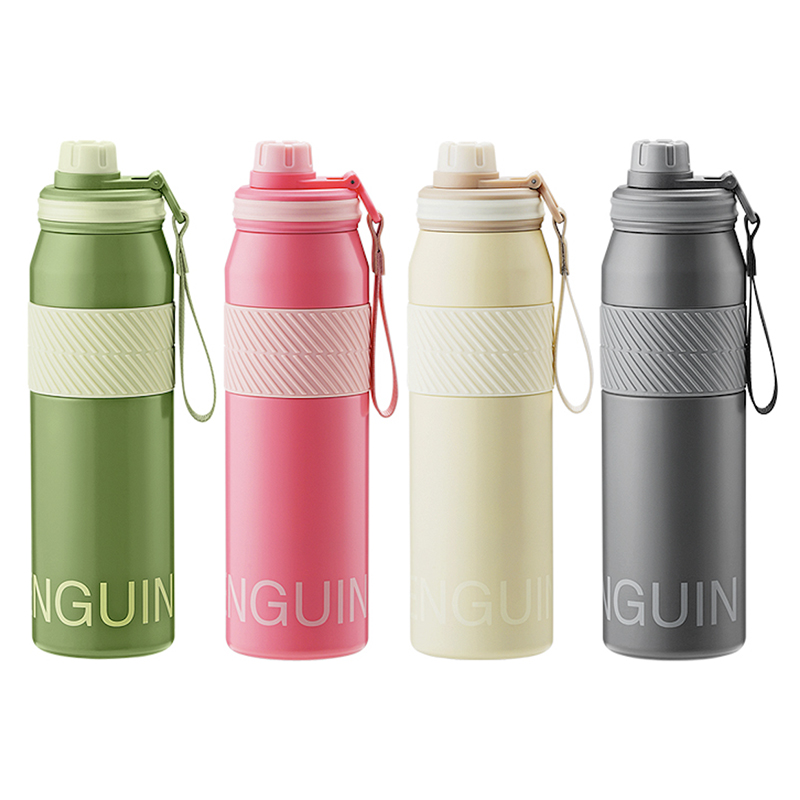
The vacuum insulation principle relies on the absence of air molecules to transmit heat. In a standard single-wall container, heat moves through the wall material and across the air gap. In a double-wall vacuum bottle, the inner wall contacts the beverage, the outer wall contacts the ambient environment, but the vacuum between them provides no medium for conductive or convective heat transfer. Radiant heat transfer still occurs, which is why high-performance bottles incorporate a copper or aluminum reflective layer—typically applied to the outer surface of the inner wall—to reflect radiant heat back toward the beverage or outward depending on the intended application.
The quality of the vacuum seal determines the bottle's thermal performance. Manufacturers achieve evacuation through a process called “vacuum extraction,” where a small port—usually at the bottle's base—is used to draw air from the cavity, which is then sealed with a glass bead or metal plug. The permanence of this seal is critical; any breach allows air to re-enter the cavity, gradually degrading thermal performance over time. High-quality bottles maintain vacuum integrity for the product's lifetime under normal use, while bottles with compromised seals may show visible condensation on the exterior when filled with cold liquids—an indicator of thermal bridging.
Material Safety and Corrosion Resistance
Stainless steel sports bottles are valued for their inert material properties, which do not impart flavors or chemicals to beverages and resist corrosion from a wide range of liquids. The common grade used is 304 stainless steel (also designated 18/8), containing approximately 18 percent chromium and 8 percent nickel. The chromium forms a passive oxide layer on the surface that prevents rust and provides resistance to beverages. The nickel content enhances corrosion resistance and provides the material's characteristic luster.
For users requiring higher corrosion resistance—particularly for saltwater exposure or long-term storage of acidic beverages—316 stainless steel (18/10 with 2 to 3 percent molybdenum) is specified. The molybdenum addition provides resistance to pitting corrosion from chlorides, making these bottles suitable for marine environments or for carrying electrolyte-enhanced sports drinks with high salt content. However, 316 bottles typically cost 20 to 40 percent more than 304 equivalents.
Thermal Performance Metrics and Testing
The thermal performance of vacuum stainless steel sports bottles is quantified by their ability to maintain beverage temperature under specified conditions. Manufacturers typically report performance in terms of hours to reach a specified temperature change—for example, “keeps liquids hot for 12 hours” or “keeps liquids cold for 24 hours.” Understanding these metrics helps users select bottles appropriate for their activities.
Standard testing conditions: Thermal performance claims are based on standardized testing protocols. For hot beverages, the test typically involves filling the bottle with water at 95°C (203°F), sealing it, and measuring the temperature at specified intervals. A bottle that maintains water above 60°C (140°F) for 12 hours under controlled laboratory conditions is considered to have good hot retention. For cold beverages, the test uses water at 0°C to 4°C (32°F to 39°F) and measures how long it remains below 10°C (50°F). High-performance bottles may maintain cold temperatures for 24 to 48 hours.
Factors affecting real-world performance: Laboratory testing conditions differ from actual use. Several factors reduce thermal performance in practice:
Initial fill temperature: Pre-heating or pre-cooling the bottle before filling improves performance. Pouring hot liquid into a room-temperature bottle causes immediate heat loss to the stainless steel walls. Pre-heating with hot water for 2 to 3 minutes before filling can extend hot retention by 2 to 4 hours.
Frequency of opening: Each time the lid is opened, ambient air enters the bottle, transferring heat to or from the contents. For a bottle used during sports activities where the lid is opened multiple times per hour, actual thermal performance will be significantly lower than laboratory tests that assume the bottle remains sealed.
Lid design and heat loss: The lid is typically the weakest point in the thermal barrier. Even with a vacuum-insulated body, heat transfers through the lid via conduction through the metal components and through the seal. Double-wall lids, where the inner and outer portions are separated by an air gap or insulating material, provide better thermal performance than single-wall designs. Lids with metal drinking surfaces transfer heat more readily than those with plastic or silicone mouthpieces.


- Quick Links
- Home
- Customization
- Products
- News
- About
- Manufacturing
- Contact Information
- Tel : +86-579-86600888
- Phone : +86-18967438668
- Email : [email protected]/ [email protected]
- Add : Area A, Jinyidong Industrial Zone, Huashui Town, Dongyang City, Zhejiang Province, China
- Contact Us

