


 English
  日本語
日本語  Deutsch



Industry News
How Big Water Bottles for Sports Improve Training Hydration
2026-07-10
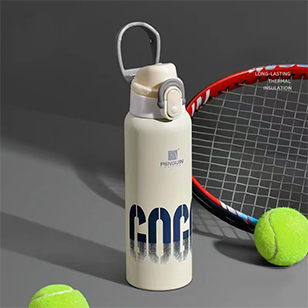
Nothing breaks training momentum quite like realizing your bottle is empty halfway through a session, especially when the nearest tap is three courts, two trails, or an entire gym floor away. Anyone who trains regularly, coaches a team, or manages hydration gear for a group knows this frustration well, and it usually leads to the same search: Big Water Bottles for Sports that actually solve the refilling problem instead of just delaying it slightly. The good news is that capacity alone changes the equation more than more people expect. This isn't just a matter of buying something larger and calling it solved. Capacity, material, and structure all play into whether a bottle genuinely reduces refill frequency or just adds bulk without much practical benefit. Getting this right matters for individual athletes, but it matters even more for teams, gyms, and organizations trying to standardize hydration gear across dozens or hundreds of people.
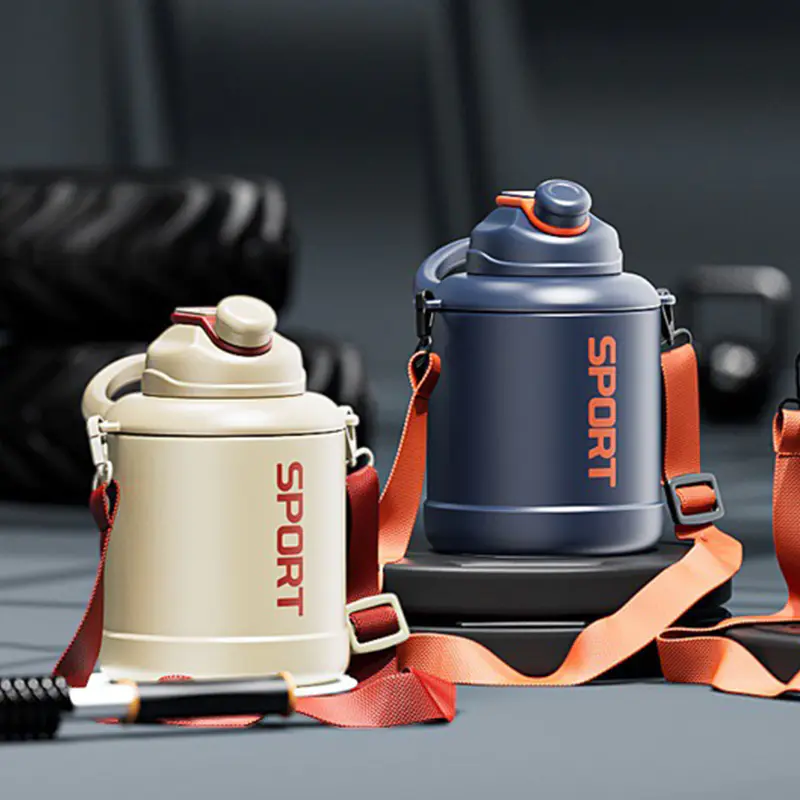
Why Do Athletes Actually Need Larger Capacity Bottles?
Frequent refilling isn't just an inconvenience, it disrupts focus and rhythm during training or competition. A few reasons larger capacity bottles have become the practical default for serious athletes:
- Long training sessions, particularly endurance work, demand steady fluid intake without repeated interruptions to locate a water source.
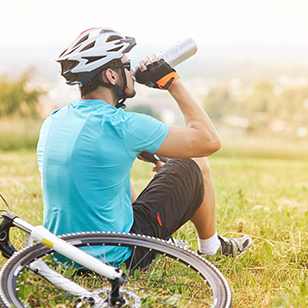
- Outdoor activities like hiking or trail running often mean water access is limited or entirely unavailable, making a higher-capacity bottle less of a convenience and more of a necessity.
- Team sports create shared hydration stations, and a larger bottle per athlete reduces the bottleneck around a single cooler or fountain during breaks.
- Hot weather training accelerates fluid loss, meaning smaller bottles empty faster than athletes can reasonably keep up with.
- Consistent hydration habits improve when refilling isn't a constant distraction pulling attention away from the actual activity.
None of this means smaller bottles are useless, they still work fine for short sessions. But for anything stretching beyond an hour, or anything happening away from easy water access, capacity becomes the deciding factor.
Big Water Bottles Versus Small Sports Water Bottles
Comparing these two categories directly helps clarify when size actually matters and when it doesn't.
| Feature | Big Water Bottles | Small Sports Water Bottles |
|---|---|---|
| Capacity | Higher, supports extended use | Lower, suited for shorter sessions |
| Refill Frequency | Reduced considerably | Frequent, especially in heat |
| Portability | Bulkier, less pocket-friendly | Easier to carry casually |
| Best Suited For | Long training, outdoor activity, team use | Quick workouts, daily errands |
| Weight When Full | Heavier | Lighter |
Neither option is universally better, the right choice depends entirely on how and where the bottle gets used. Someone running errands with a quick gym stop probably doesn't need the bulk of a larger bottle. Someone training for two hours outdoors in warm weather almost certainly does.
Does Material Choice Change How Well a Big Bottle Performs?
Yes, and this is where a lot of buyers underestimate the difference. Capacity alone doesn't guarantee a bottle performs well under real training conditions, the material matters just as much.
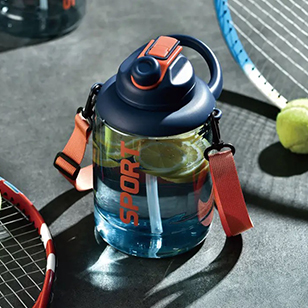
Tritan sports water bottles have become a common choice for larger capacity designs. The material holds up well against repeated drops and impacts, which matters considerably once a bottle gets heavier when full. It also tends to resist retaining odors or flavors from previous use, something that becomes noticeable in bottles used daily across weeks of training.
Standard plastic bottles remain widely used because they're lightweight even at higher volumes, making them practical for athletes who don't want the added weight of heavier materials once the bottle is full.
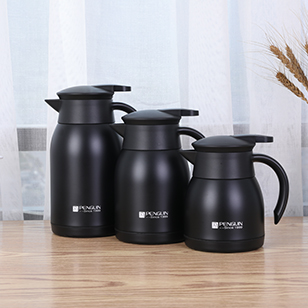
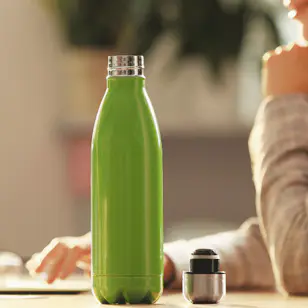
Vacuum insulated bottles, sometimes built for both hydration and temperature retention, work well when keeping water cool matters as much as capacity, though they tend to weigh more and cost somewhat more to produce.
Choosing between these often comes down to whether temperature retention matters for the specific sport or environment, and whether weight is a bigger concern than insulation performance.
What Should Buyers Consider Before Choosing a Capacity Size?
Not every large bottle serves every purpose equally well. A few practical questions help narrow down the right size:
- How long does a typical training session or outdoor activity actually last, and how much fluid does that realistically require?
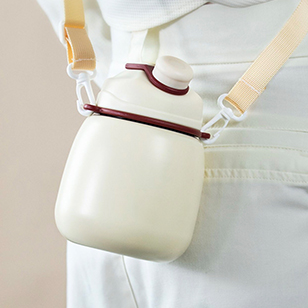
- Is the bottle carried by hand, attached to gear, or stored in a shared team cooler between uses?
- Does the environment allow for occasional refilling, or is water access genuinely limited during the activity?
- Will the bottle be used daily across a season, meaning durability under repeated washing and handling becomes a bigger factor than a one-time purchase would have suggested?
Answering these honestly usually points toward a workable range rather than defaulting to the largest available option out of habit.
Why Do Businesses and Teams Choose Custom Gym Water Bottles?
Beyond individual athletes, a growing share of demand comes from teams, gyms, and organizations outfitting groups with matching hydration gear. Custom gym water bottles serve a few distinct purposes here.
- Branding consistency across a team roster or gym membership creates a more unified, professional appearance during events and daily training.
- Promotional campaigns often use custom bottles as giveaways, since a functional item tends to get used repeatedly rather than discarded like many other promotional products.
- Team events and tournaments benefit from matching gear that also serves a practical hydration purpose, combining visibility with actual usefulness.
- Corporate wellness programs increasingly include branded hydration products as part of broader health initiatives, giving the item purpose beyond simple marketing.
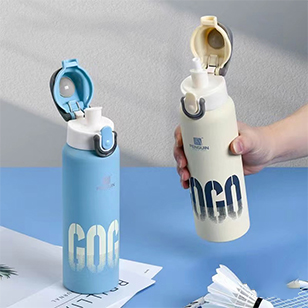
For organizations considering this route, custom orders typically involve decisions around color, printed or embossed branding, capacity, and material, all of which should align with how the bottles will actually be used day to day rather than just how they look in a product photo.
How Should a Buyer Approach Finding a Reliable Sports Water Bottle Manufacturer?
Once the decision moves toward bulk purchasing or custom production, sourcing becomes the next hurdle. A few factors separate a dependable sports water bottle manufacturer from one that creates more problems than it solves.
- Ask directly about production capability for the specific capacity and material combination needed, since not every facility handles every material equally well.
- Confirm whether customization options extend beyond basic printing to include structural adjustments like cap style, grip texture, or wall thickness.
- Request information about order quantities and how pricing shifts between smaller trial runs and larger wholesale orders.
- Look into consistency across repeat orders, a strong sample means little if quality varies noticeably on the next production run.
- Ask whether the supplier works with sports water bottles wholesale programs, since that experience often translates into smoother logistics for bulk fulfillment.
Buyers who skip these questions often end up managing quality issues after the fact, which costs more time and money than a thorough vetting process upfront would have.
Bringing Hydration Strategy and Sourcing Together
Choosing the right hydration setup for serious training or team use really comes down to matching capacity, material, and structure to how the bottle actually gets used, not just picking the biggest option available and assuming it solves everything. Athletes training for extended sessions, teams managing shared gear across dozens of members, and organizations building branded hydration programs all benefit from thinking through these factors before placing an order rather than after receiving a batch that doesn't quite fit the need. A well-matched bottle reduces interruptions during activity, holds up across repeated daily use, and, when customized thoughtfully, reinforces team or brand identity without sacrificing practicality. For teams, gyms, and businesses ready to move from planning into sourcing, working with an experienced manufacturer capable of handling both capacity requirements and customization details makes that transition considerably smoother. Zhejiang Yuneng Industry Co., Ltd. works with buyers across these exact needs, offering production capability suited to both standard and custom sports water bottle orders, and stands ready to help translate your hydration requirements into a workable, reliable product line.

- Quick Links
- Home
- Customization
- Products
- News
- About
- Manufacturing
- Contact Information
- Tel : +86-579-86600888
- Phone : +86-18967438668
- Email : [email protected]/ [email protected]
- Add : Area A, Jinyidong Industrial Zone, Huashui Town, Dongyang City, Zhejiang Province, China
- Contact Us

