


 English
 日本語
 Deutsch


 HOME / NEWS / Industry News / How Can a Portable Thermos Bottle Be Engineered for One-Handed Operation?

Industry News
How Can a Portable Thermos Bottle Be Engineered for One-Handed Operation?
2026-11-13
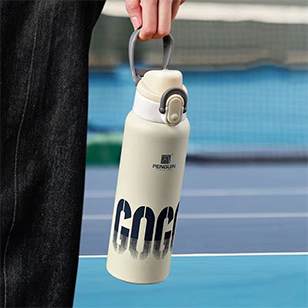
Opening a thermos while walking, commuting, or carrying something in the other hand sounds simple enough. In practice, a lid that is difficult to press, a slippery bottle body, or a loose locking mechanism can make the experience frustrating.
For a Portable Thermos Bottle, one-handed operation needs to be considered from the beginning of product design. The lid, button, hinge, grip, and sealing structure all affect how easily the bottle can be used. Making one component easier to operate should not create problems elsewhere, particularly with leakage and heat retention.
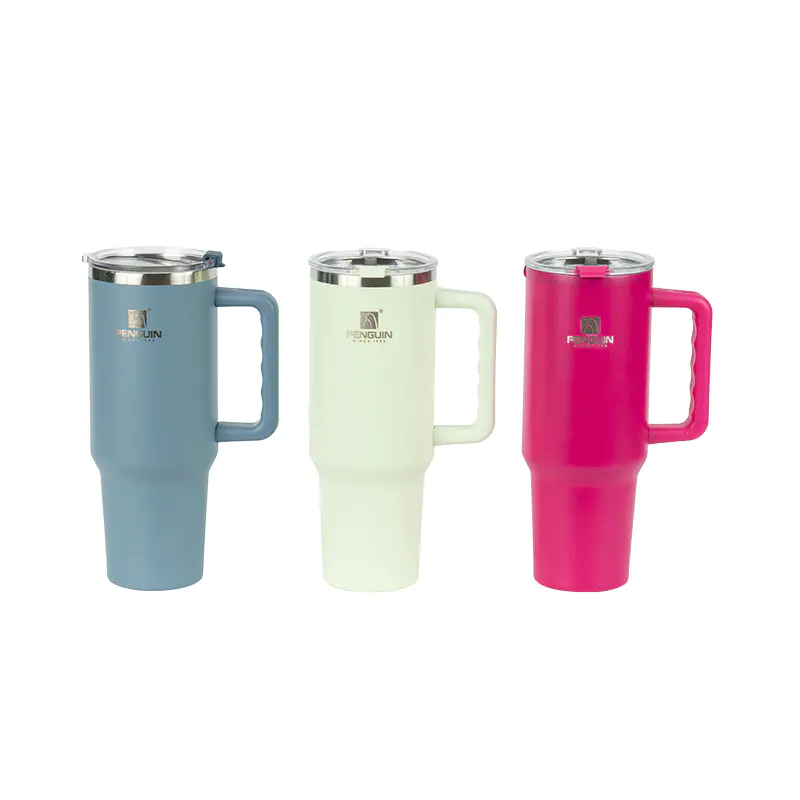
Choosing a Lid Mechanism That Is Easy to Operate
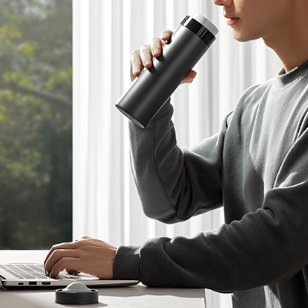
The lid usually determines whether a bottle is genuinely convenient to use with one hand. Users should be able to open it with their thumb, drink without awkward positioning, and close it without having to adjust their grip several times.
Several mechanisms are commonly used:
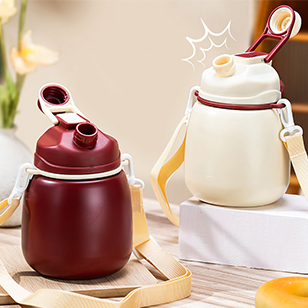
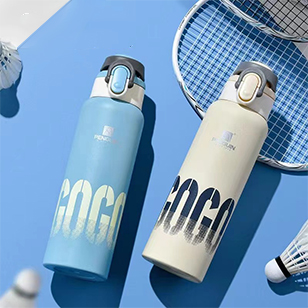
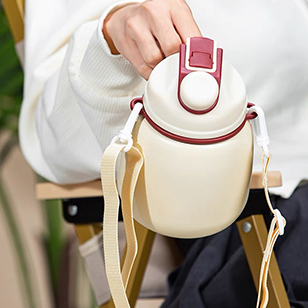
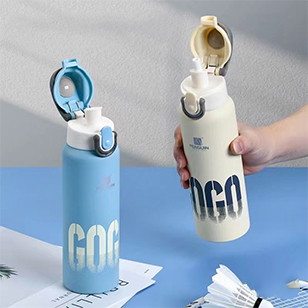
- Push-button lids: A button releases a spring-loaded cover. The mechanism should respond smoothly without requiring excessive force.
- Flip-top lids: A hinged cover opens quickly and remains attached to the lid.
- Sliding lids: A movable section exposes the drinking opening. Accurate fitting is important to prevent sticking or leakage.
- Trigger-action lids: A lever controls the opening mechanism and allows access while the bottle is being held.
Each design has its own weak points. Push buttons depend on spring and locking reliability, while flip-top lids need hinges that can withstand repeated movement. Sliding mechanisms are particularly sensitive to manufacturing tolerances and dirt accumulation.
Making the Bottle Comfortable to Hold
A lid can work perfectly and still be inconvenient if the bottle is difficult to grip.
Body diameter is an important consideration. A bottle that is too wide may be uncomfortable for users with smaller hands, especially when full. A tapered body or recessed grip area can make it easier to hold while drinking.
Surface treatment matters too. Smooth stainless steel can become slippery when wet, so some designs incorporate silicone sleeves, textured coatings, or molded grip sections.
Weight distribution should also be checked. A heavy lid can make a tall bottle feel unbalanced when tilted. Designers should test the bottle at different fill levels rather than judging its handling from an empty sample.
Preventing Accidental Opening and Leakage
Convenient access is useful, but nobody wants a thermos opening inside a backpack.
Push-button lids often include a secondary safety lock to prevent accidental activation. The button itself should not be so sensitive that ordinary contact can release the cover.
Sealing depends largely on the gasket design. Food-contact-grade silicone is commonly used around the lid and drinking opening. Its dimensions and compression need to be controlled carefully: insufficient pressure can cause leakage, while excessive compression makes the lid harder to close.
Gaskets also need to withstand repeated use, hot and cold beverages, and routine cleaning without losing their shape.
Before approving a design, manufacturers should test the complete lid through repeated opening cycles, leakage tests, and temperature changes. A new lid that seals perfectly may behave differently after months of daily use.
Selecting Materials for Each Component
The bottle body and lid don't necessarily need to use the same materials. Different components have different mechanical and thermal requirements.
| Component | Common material | Main consideration |
|---|---|---|
| Inner and outer body | Stainless steel | Corrosion resistance and vacuum insulation |
| Lid housing | Food-contact-grade plastic | Strength and dimensional stability |
| Sealing gasket | Food-contact silicone | Elasticity and leak prevention |
| Button or trigger | Engineering plastic | Repeated mechanical operation |
| Hinge and spring | Stainless steel or suitable alloy | Fatigue and corrosion resistance |
| Grip section | Silicone or textured polymer | Comfort and slip resistance |
Material selection should account for temperature exposure, beverage contact, cleaning methods, and applicable food-contact requirements. Buyers should request documentation for the actual material grades and formulations used.
Keeping Drinks Hot Without Making the Lid Complicated
The vacuum-insulated body is responsible for much of a thermos bottle's heat retention, but the lid can become a weak point.
Moving parts, drinking channels, and additional openings create potential paths for heat transfer. A complicated lid may also have more joints that need sealing.
Designers need to pay attention to the drinking port. If it is too narrow, drinking becomes uncomfortable. If it is too large, spills become easier and heat can escape more quickly.
Thermal testing should be performed on the finished bottle with its actual lid installed. Testing the insulated body separately will not show how the complete product performs.
Testing Whether One-Handed Operation Works in Practice
Mechanical specifications don't tell the whole story. A button may pass a durability test but still be awkward for someone with smaller hands.
User trials should include people with different hand sizes and grip strengths. They should test the bottle when empty, partly filled, and full.
| Test | What to evaluate |
|---|---|
| Button force | How much pressure is needed to open the lid |
| Cycle testing | Wear on springs, hinges, and locking parts |
| Leakage testing | Seal performance in different orientations |
| Grip testing | Comfort and control during handling |
| Thermal testing | Temperature retention with the complete lid |
| Cleaning inspection | Access to narrow areas and removable components |
It is also useful to test the bottle while users are carrying a bag or moving around. For products marketed to drivers, one-handed operation should not be presented as encouragement to handle the bottle while driving.
Making the Design Suitable for Mass Production
A lid with several buttons, springs, hinges, and seals may work well in a prototype but become difficult to manufacture consistently.
Injection-molded parts need controlled dimensions. Spring placement, gasket installation, and locking engagement also require reliable assembly procedures. Even small differences in fitting tolerances can change button resistance or sealing performance.
Manufacturers should run pilot batches before mass production to identify problems with assembly, leakage, and button operation. A modular lid can also make servicing easier, provided replacement parts remain available and the design doesn't require complicated disassembly.
Developing a Portable Thermos Bottle That Works One-Handed
A bottle should open without a struggle, stay sealed when carried, and keep drinks at the intended temperature. These requirements can conflict when too many moving parts are added to the lid.
For OEM development, testing several lid designs before finalizing the structure is worthwhile. Button force, grip dimensions, gasket compression, and thermal retention should all be checked on complete samples. Getting these details right makes one-handed operation a practical feature rather than just another selling point.


- Quick Links
- Home
- Customization
- Products
- News
- About
- Manufacturing
- Contact Information
- Tel : +86-579-86600888
- Phone : +86-18967438668
- Email : [email protected]/ [email protected]
- Add : Area A, Jinyidong Industrial Zone, Huashui Town, Dongyang City, Zhejiang Province, China
- Contact Us

