


 English
  日本語
日本語  Deutsch

 HOME / NEWS / Industry News / How does the vacuum insulation in a stainless steel flask work to keep liquids hot or cold?
Industry News
How does the vacuum insulation in a stainless steel flask work to keep liquids hot or cold?
2026-01-28
How does the vacuum insulation in a stainless steel flask work to keep liquids hot or cold?
The insulation relies on the principle that heat transfer requires a medium. In a typical flask, there are three methods of heat transfer: conduction, convection, and radiation. The double-wall construction addresses each one. The vacuum-sealed space between the inner and outer stainless steel walls is the key element. By removing the air, this space eliminates the mediums for conduction (direct transfer through a solid or gas) and convection (transfer via moving air currents). With the vacuum in place, heat can only travel via radiation (infrared energy) across the gap, which is a much slower process.
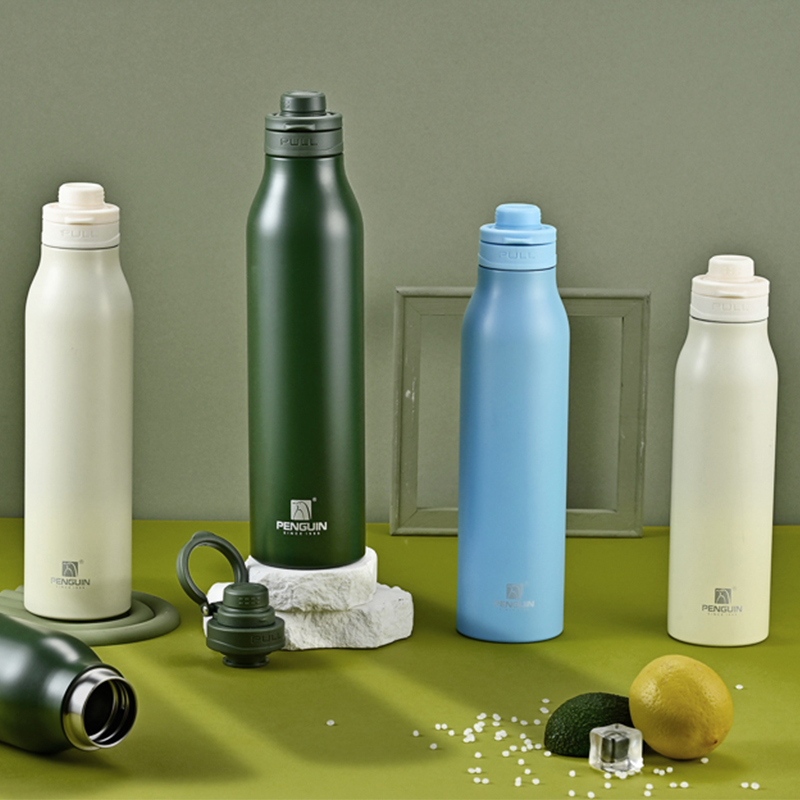
To further impede radiant heat, the inner wall of the vacuum chamber is often coated with a thin, reflective layer of copper or silver. This metallic lining reflects radiant heat back toward the liquid, enhancing the insulating effect. The combination of the vacuum barrier and the reflective lining allows the flask to slow temperature change significantly, keeping hot liquids hot and cold liquids cold for extended periods, though not indefinitely.
What are realistic expectations for temperature retention, and what factors affect it?
Stainless steel flask manufacturers typically provide performance estimates based on controlled tests, such as keeping a boiling liquid above a certain temperature for 12 or 24 hours. However, real-world performance varies based on several factors. The starting temperature of the liquid is the significant variable. Pre-heating or pre-chilling the flask before filling it can improve performance by reducing the initial temperature difference between the liquid and the flask wall.
The fill level is another important factor. A full flask retains temperature better than a half-full one because there is less internal air space. The air inside can change temperature more readily than the liquid, and when the flask is opened, this air is exchanged with the environment. Ambient conditions also play a role; a flask will lose heat faster on a cold, windy day than in a mild indoor environment. Finally, user behavior is critical. Every time the lid is opened, a significant amount of hot or cold air is exchanged, which is the single greatest cause of temperature loss in regular use.
Why are certain beverages, like milk or fruit juice, not recommended for long-term storage in a vacuum flask?
The recommendation is based on food safety and material compatibility, not the flask's insulation capability. Vacuum flasks are designed for temperature retention, not as active cooling or sterile storage systems. Dairy-based beverages like milk are prone to bacterial growth if kept in the "danger zone" between 4°C and 60°C for extended periods. A flask may keep milk warm enough to support bacterial multiplication but not hot enough to be pasteurizing, creating a potential health risk.
Acidic beverages such as fruit juices or sports drinks can, over many hours, interact with the stainless steel, potentially imparting a metallic taste. While food-grade stainless steel (304 or 316) is highly resistant, prolonged contact with very acidic liquids can bring about this effect. Furthermore, sugars in these drinks can promote bacterial growth in small residues if the flask is not cleaned thoroughly immediately after use.
What is the proper method for cleaning and maintaining a vacuum flask to ensure hygiene and longevity?
Proper care is necessary to prevent odors, stains, and damage to the interior finish. For daily cleaning, rinsing with warm water and a bottle brush is usually sufficient. For deeper cleaning or to remove odors, a mixture of baking soda and warm water can be used as a gentle, non-abrasive soak. A dilute solution of white vinegar and water is effective for removing mineral deposits from hard water or coffee/tea stains. After any cleaning, the flask must be thoroughly rinsed and air-dried with the lid off to prevent moisture-related odors.
Several practices should be avoided. Dishwashers are generally not recommended because the harsh detergent and intense heat can degrade seals, damage exterior finishes, and potentially compromise the vacuum seal over time. Abrasive scouring pads or harsh chemicals like bleach should not be used, as they can scratch the polished interior, creating microscopic grooves where bacteria and odors can reside. It is also advisable to avoid storing the flask with the lid tightly sealed when not in use, as this can trap residual moisture and bring about musty smells; storing it open allows for airflow.



- Quick Links
- Home
- Customization
- Products
- News
- About
- Manufacturing
- Contact Information
- Tel : +86-579-86600888
- Phone : +86-18967438668
- Email : [email protected]/ [email protected]
- Add : Area A, Jinyidong Industrial Zone, Huashui Town, Dongyang City, Zhejiang Province, China
- Contact Us

