


 English
  日本語
日本語  Deutsch



Industry News
Office Commuting with Vacuum Stainless Steel Flasks Guide
2026-06-05
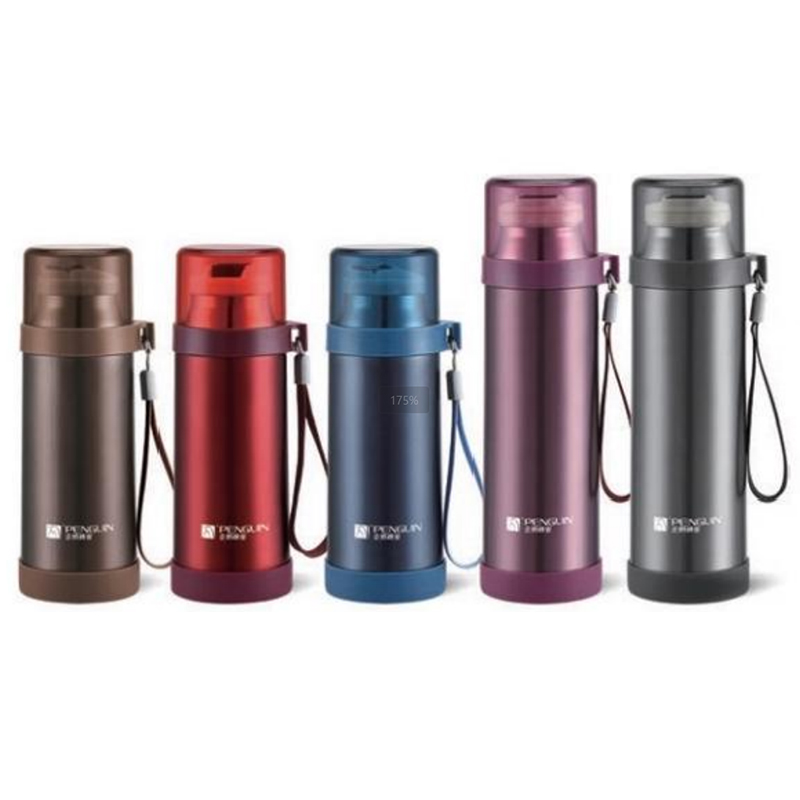
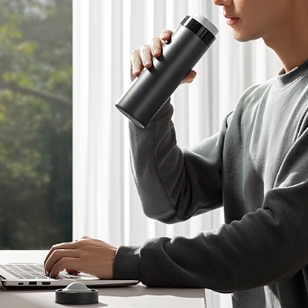
The coffee was hot when you left the house. By the time you reached the office — thirty minutes on the subway, a walk in the cold, a slow elevator — it was barely warm, and the disposable cup had already started going soft at the rim. For commuters who rely on a morning drink to carry them through the early stretch of the workday, this is a recurring frustration that one decent flask solves entirely. Vacuum Stainless Steel Flasks exist specifically for this kind of daily use: long enough temperature retention to outlast a commute, durable enough to survive a bag being shoved under a seat, and sealed well enough that an accidental tip-over in a packed train car is not a catastrophe. Getting the selection right, though, means thinking through which features matter for your specific commute — not just which product looks good on a shelf.
What Makes Vacuum Insulation Different From Standard Insulation?
The insulation mechanism in Vacuum Stainless Steel Flasks is worth understanding, because it explains why the performance difference between a vacuum-insulated flask and a standard double-wall product is so significant in real use.
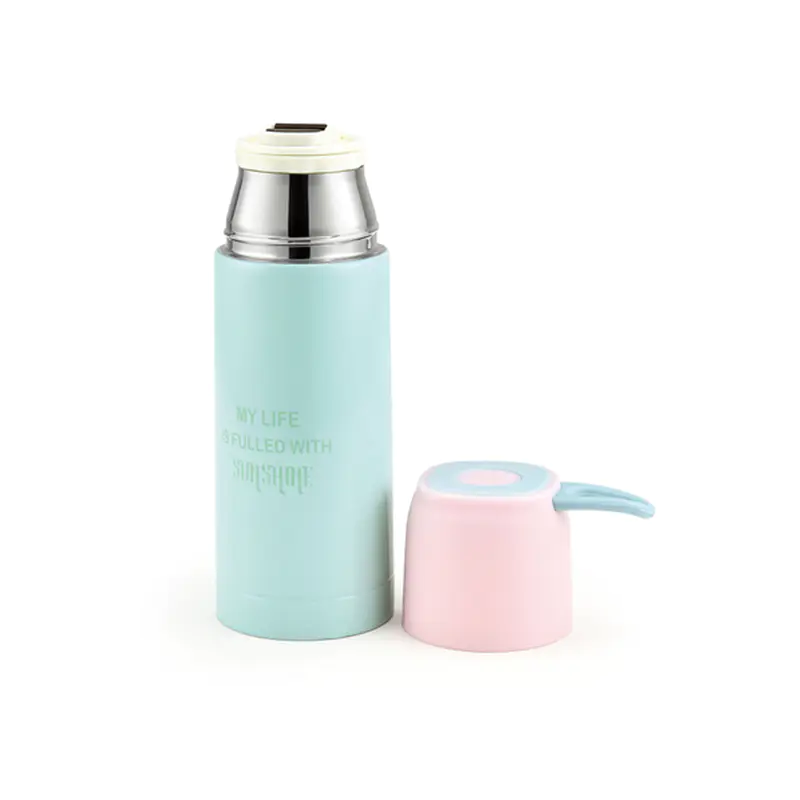
A standard double-wall container traps a layer of air between two walls. Air is a reasonably good insulator against conduction — heat does not transfer through it as quickly as through a solid material — but it still allows some heat transfer through convection, where air circulates within the gap and carries heat from one wall to the other.
A vacuum-insulated flask removes the air from that gap entirely. With no medium present for convection or conduction to work through, the only significant heat transfer pathway is radiation — and in many flask designs, a reflective inner surface further reduces that. The result is a thermal barrier that loses heat dramatically slower than any air-insulated alternative.
For a commuter, what this translates to practically:
- A hot drink stays genuinely hot — not just warm — through a standard morning commute and into the early hours at a desk.
- Cold drinks stay cold through a full working day without ice, which matters during warm weather commutes
- The flask exterior stays at roughly ambient temperature, so it does not heat up uncomfortably in a bag or cool a hand during cold weather
This is the core performance reason why Vacuum Stainless Steel Flasks have displaced single-wall and basic double-wall products for daily use among people who care about their drink being the right temperature when they actually drink it.
Does Capacity Actually Matter for Commuting Use?
It does — and it is one of the decisions that affects daily satisfaction more than many people anticipate before they make it.
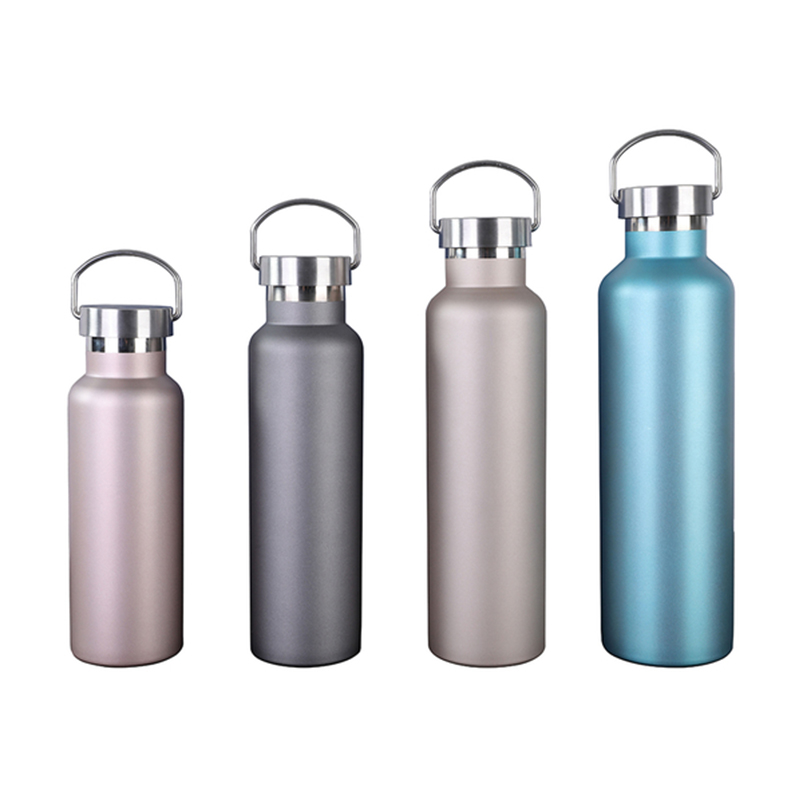
Smaller flasks — in the range of a standard travel mug — are genuinely portable. They fit in coat pockets, sit comfortably in bag side pockets, and do not add noticeable weight to a daily carry. For someone who wants one coffee to drink on the train and nothing else, this size is sufficient and the lower weight is a genuine practical benefit.
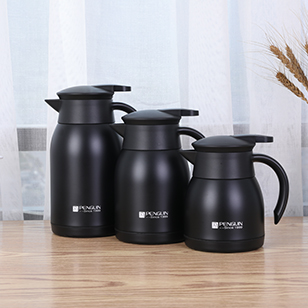
Mid-size flasks cover a broader range of users. A flask in this range holds enough for a morning coffee and a refill, or enough tea to last through a mid-morning meeting. This capacity suits people who do not want to refill from a kettle at the office but also do not need to carry a full day's worth of drinks.
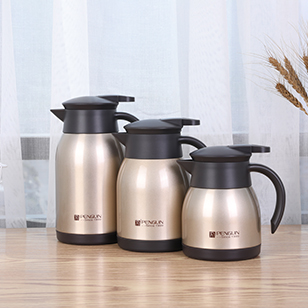
Larger flasks hold enough for an all-day supply of water or multiple servings of coffee. The trade-off is weight — a full large flask is noticeably heavier in a bag than a smaller one — and slightly reduced portability. For people who commute by car rather than on foot or public transport, the weight issue is less relevant, and the convenience of not refilling at work justifies the larger size.
A practical framing for capacity selection:
- Train or subway commuter: A smaller or mid-size flask, with emphasis on fitting in bag pockets and not adding bulk
- Car commuter: Any capacity that fits the car cup holder, which is the main practical constraint
- Long commute followed by a full office day: A larger flask that doubles as a desk water bottle reduces the need to use shared office facilities
- Cyclist or walking commuter: A mid-size flask that fits a bicycle bottle cage or is light enough not to fatigue the shoulder on a longer walk
Lid Design and One-Hand Operation: Why It Matters More Than It Seems
The lid is the interface between the flask and the person using it every day, and lid design has a much larger effect on daily satisfaction than it does on a product specification sheet.
Screw caps:
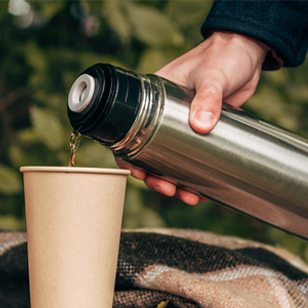
A fully sealed screw cap provides reliable leak protection. The trade-off is that it requires two hands to open — one to hold the flask, one to turn the cap — and requires putting the cap somewhere during drinking. On a crowded train or while driving, neither of these is trivial. Screw caps suit situations where the flask is used at a desk or a table rather than while in motion.
Flip-top lids:
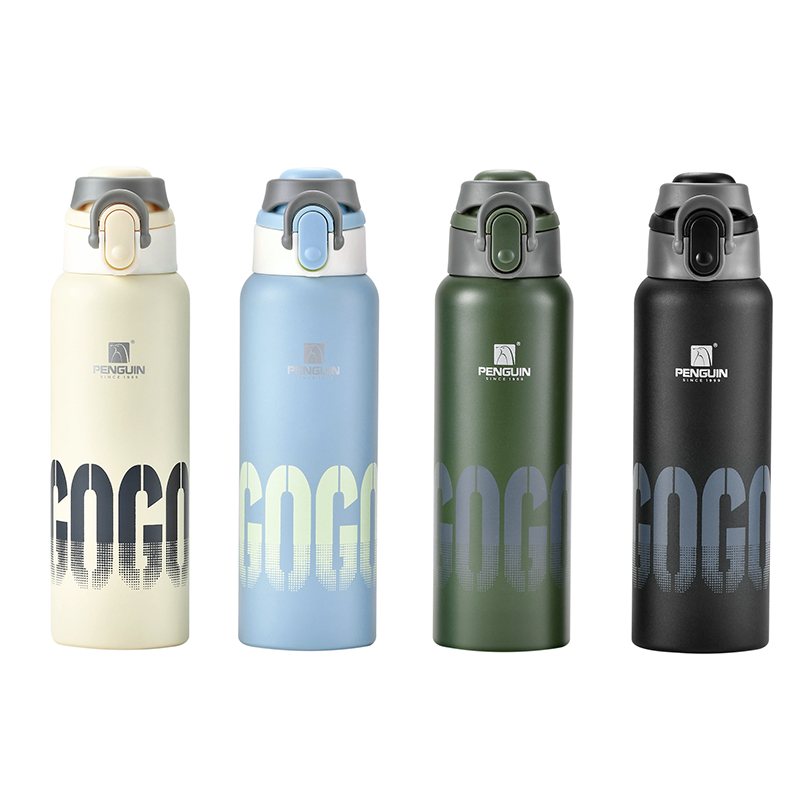
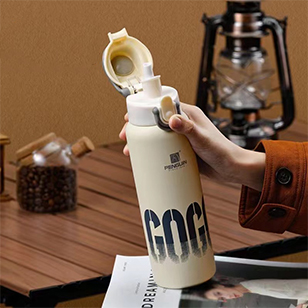
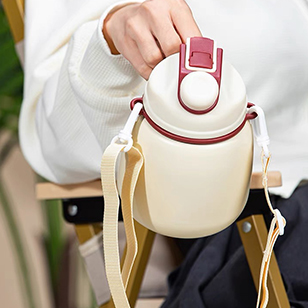
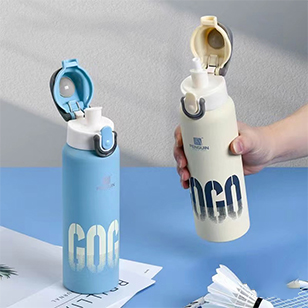
A push-button or flip mechanism allows one-handed operation — press, drink, close. The seal quality of flip lids has improved considerably in modern designs, but they are generally slightly less leak-resistant than a well-made screw cap. For commuters who drink while walking or standing on public transport, the one-hand convenience typically outweighs the minor reduction in seal redundancy.
Integrated straw systems:
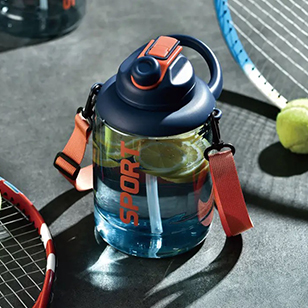
Some flask designs include a straw mechanism for easy drinking without tilting the flask. These suit cold drink users and people who prefer drinking water throughout the day. They are less common in insulated flask designs because the straw mechanism creates additional sealing complexity.
Wide-mouth vs. narrow-mouth openings:
Wide-mouth flasks are easier to clean, easier to fill from a kettle or tap, and allow ice to be added for cold drinks. Narrow-mouth openings pour more cleanly and suit people who drink directly from the flask while moving. The choice reflects use habits more than a hierarchy of performance.
Leak Resistance: The Commuting Non-Negotiable
A flask that leaks in a bag destroys everything the bag contains. For commuters carrying laptops, documents, or other items that do not survive liquid contact, leak resistance is a non-negotiable feature rather than a nice-to-have.
What determines whether a flask leaks:
- Lid seal quality: The seal between the lid and the flask body — typically a silicone or rubber gasket — determines whether liquid can escape when the flask is inverted or knocked over. Gaskets that are precisely dimensioned and correctly seated provide reliable seals; those that fit loosely or are made from materials that degrade quickly under temperature cycling do not.
- Pressure differential behavior: Hot liquids create pressure inside a sealed flask as the liquid and the air above it expand. Flasks that are sealed too completely without any pressure relief can experience seal stress or audible "pop" when opened. This is typically managed in lid design through controlled venting that releases pressure without allowing liquid to escape.
- Thread quality on screw caps: On screw-cap designs, the thread engagement between the cap and the flask body determines how consistently the seal compresses. Worn or imprecise threads allow the cap to sit at slightly different positions each time it is closed, which affects seal compression.
- Testing against use orientation: A flask should be tested lying on its side and inverted, not just sitting upright. Commuting bags are not always oriented neatly — a flask that seals reliably upright but leaks when sideways is a bag-contents liability.
For buyers evaluating flasks for retail distribution or corporate gifting, these seal quality factors are worth confirming through actual testing rather than accepting product claims at face value.
Flask Feature Comparison by Commute Type
| Commute Type | Key Feature Priority | Suitable Capacity | Lid Type | Physical Constraint |
|---|---|---|---|---|
| Subway or train | Portability, bag fit, leak resistance | Smaller to mid-size | Flip-top or screw | Must fit in bag side pocket or tote |
| Car commute | Cup holder fit, one-hand use | Mid to larger | Flip-top or straw | Cup holder diameter determines size |
| Walking commute | Lightweight, secure lid, exterior grip | Smaller to mid | Flip-top | Weight matters across distance |
| Cycling commute | Bottle cage compatible, lightweight | Mid-size | Sport cap or straw | Cage dimensions constrain diameter |
| Mixed (train plus walk) | All-round portability, reliable seal | Mid-size | Flip-top | Balance between weight and capacity |
| All-day desk use | Capacity for full day, easy cleaning | Larger | Wide-mouth screw | Fits on desk surface, easy to refill |
Reading across the rows confirms that no single configuration suits every commute type equally.The features that matter a great deal depend on how the flask travels and how it is used during the day — not just on how well it performs in a controlled temperature test.
Material Safety and Why Food-Grade Steel Matters
Stainless steel is not a single material. Different alloy grades have different properties relevant to food and drink contact applications, and understanding the distinction matters for buyers sourcing at volume.
The grade designation commonly seen in quality flask production indicates an alloy composition with sufficient chromium and nickel content to provide corrosion resistance, resistance to flavor transfer, and stability under repeated heat cycling. This grade is appropriate for long-term contact with hot and cold beverages without leaching detectable levels of metallic compounds into the drink.
Food-grade stainless also resists the cleaning chemicals used in commercial or household dishwashers better than lower-grade alternatives, which is relevant for a product expected to be cleaned daily over years of use.
What this means for buyers:
- Ask for material certification or grade specification rather than accepting generic "stainless steel" claims
- Verify that internal surfaces are free from coatings or linings that could degrade or chip — uncoated food-grade steel is preferable to coatings of uncertain provenance
- Confirm that lid components — gaskets, O-rings, straw elements — are BPA-free and made from materials safe for prolonged food contact
For corporate gifting programs, employee wellness product sourcing, or branded merchandise, the material safety documentation is also relevant from a liability and brand reputation perspective — a corporate gift that turns out to have substandard materials creates a problem that goes beyond the product itself.
The Exterior Design: Grip, Finish, and Daily Wear
A flask's exterior finish affects how it handles in daily use more than many product comparisons acknowledge.
Surface finish options:
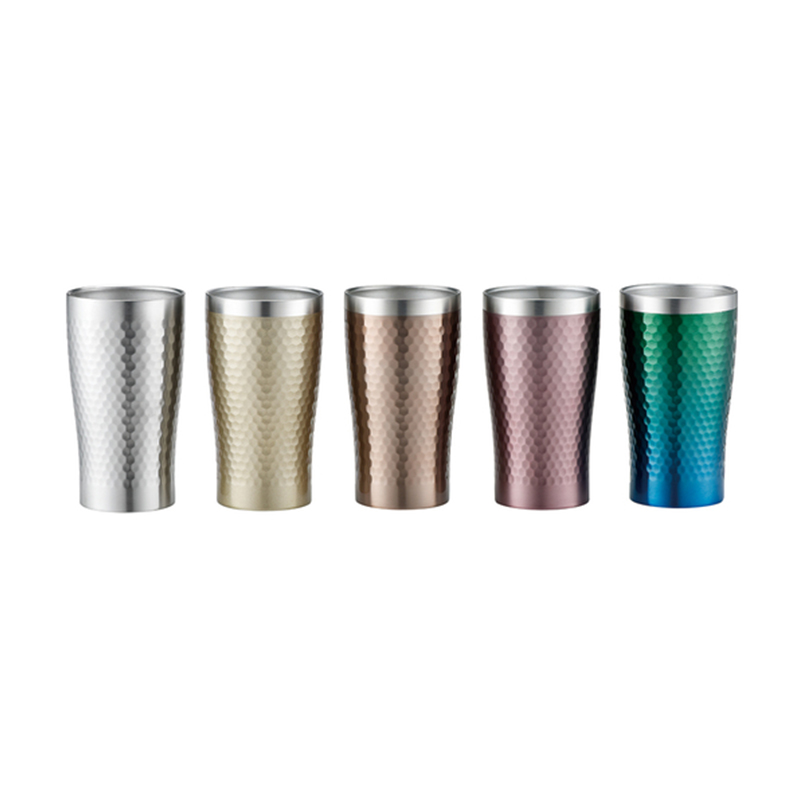
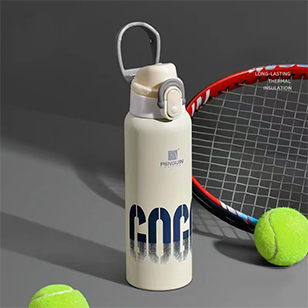
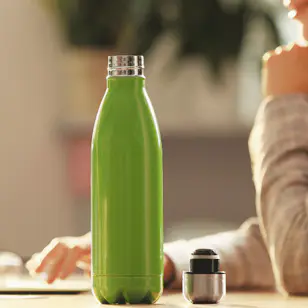
Powder-coated finishes provide grip and are available in a wide range of colors, which suits branded and customized products. The coating also provides some thermal insulation for the hand when holding a flask containing a very hot liquid. The trade-off is that powder coating can chip at impact points over time, particularly at the base and around the lid where the flask contacts hard surfaces.
Brushed stainless finishes are more resistant to chipping but show fingerprints more readily and provide less grip on a smooth surface. They tend to look clean and professional over a longer period than powder-coated alternatives in hard-use environments.
Matte finishes balance some of the grip advantage of powder coating with better scratch resistance than high-gloss surfaces.
Grip features:
Textured surfaces, rubberized grip bands, and contoured body shapes all improve secure handling when hands are wet or gloved. For commuters using a flask in cold weather — where wet gloves from rain or snow make gripping more difficult — this is a practical consideration rather than an aesthetic one.
Size at the widest point:
Even if a flask fits nominally in a bag pocket by its stated diameter, the width at the widest point — often at the base or at the lid mechanism — can prevent it from sliding in or out easily. Measuring the actual widest cross-section rather than the stated body diameter prevents sizing surprises.
Choosing a Flask for Corporate Gifting and Branded Programs
The same features that make a flask work for daily personal use apply when selecting flasks for corporate programs — but the selection process has additional layers.
For corporate gifting, employee onboarding kits, or branded merchandise:
- Customization surface: The printable or engravable area on the flask body determines how prominently a logo or message can appear. Larger flat surfaces accommodate cleaner branding; heavily textured or contoured bodies make printing more difficult.
- Color range: Matching brand colors in powder coating or finish requires base order quantities and delivery timelines that differ significantly between manufacturers. Confirming color availability and required quantities early in the procurement process avoids schedule problems.
- Packaging options: Corporate gifts need presentation packaging. A flask that arrives in a plain poly bag needs an additional packaging step; one that comes in a ready-to-gift box reduces that cost.
- Consistent quality across large orders: For volume programs, production consistency matters — each flask in a set should look and perform identically. Suppliers with documented quality control processes reduce the risk of visual or functional variation within a large order.
For retail buyers, the same principle applies in reverse: customers comparing flasks on a shelf will notice finish inconsistencies, color variation, and lid operation differences between units in the same display. Production consistency is a brand perception factor as much as a product quality one.
What to Look for When Sourcing Vacuum Flasks at Volume
Whether sourcing for retail, gifting, or distribution, the evaluation of a flask supplier goes beyond the product specification.
Key supplier evaluation factors:
- Insulation performance verification: Ask for test data on temperature retention under a standardized protocol rather than accepting marketing copy claims. A well-specified test confirms whether the product performs as stated.
- Leak test methodology: How does the manufacturer test leak resistance? Pressure testing, inversion testing, and transport simulation testing produce different results. Knowing the test method helps evaluate how the result translates to real-world use.
- MOQ and production timeline flexibility: For retailers who need to test market acceptance before committing to large volumes, a supplier with lower initial minimums and reasonable turnaround times reduces inventory risk.
- Custom specification capability: Bespoke colors, logos, capacity modifications, or lid configurations add value for branded programs. Confirming the manufacturer's actual capability — not just their willingness to quote — before placing a custom order is worth the due diligence.
- After-sale support: When a production run has a quality issue, how quickly can the supplier identify the cause and resolve it? A supplier with transparent quality systems and responsive communication makes problem resolution straightforward; one who defaults to denial creates extended supply chain problems.
Finding the Right Flask for Everyday Use and Beyond
A flask that works for the daily commute is one that holds temperature long enough to matter, seals reliably in a moving bag, fits the carry method without adding friction, and holds the right volume for how the person actually drinks during the day. These requirements are not complicated, but they do require that the right features are present in the right combination — not just that the product looks sleek or carries a reassuring brand name. Zhejiang Yuneng Industry Co., Ltd. manufactures Vacuum Stainless Steel Flasks and related drinkware products for retail, corporate, and OEM supply, covering standard and custom configurations across a range of capacities, finishes, and lid designs. For buyers evaluating flask options for daily consumer use, branded gifting programs, or volume retail supply, reaching out to discuss product specifications, customization requirements, and order quantities is a practical starting point. Getting the right flask into the right hands — one that actually performs the way daily commuting demands — starts with a supplier conversation that goes beyond catalog browsing.


- Quick Links
- Home
- Customization
- Products
- News
- About
- Manufacturing
- Contact Information
- Tel : +86-579-86600888
- Phone : +86-18967438668
- Email : [email protected]/ [email protected]
- Add : Area A, Jinyidong Industrial Zone, Huashui Town, Dongyang City, Zhejiang Province, China
- Contact Us

